
Financial literacy has become one of the most essential—yet overlooked—life skills in today’s fast-changing economy. According to the 2026 Spark-CI Financial Literacy Survey Report, just 21% of high school students and 26% of college students said they had “some” or “a lot of” knowledge about financial matters.
However you look at it, we have work to do to better prepare American youth to adeptly manage their own finances and build more successful lives.
A month devoted to literacy
All of which brings us to Financial Literacy Month. Each April, financial services brands—and agencies like Imprint, which create content and marketing strategies for many of these brands—work to shine a light on the need to improve financial education.
Imprint sat down with one of our clients, Adelaide Craver, Executive Director with Wells Fargo’s Public Affairs External Engagement team. She manages the company’s financial education program for college athletes through Game Plan.
In 2025, the program saw a 25% YOY increase in unique student-athlete completions and a 76% YOY lift in completed courses, which cover everything from debt and budgeting to managing Name, Image and Likeness (NIL) income. The latter has become a significant focus throughout college athletics. Now in its fifth year, the NIL market was expected to reach $1.67 billion last academic year, with more than 30,000 athletes participating. That cash infusion is a true boon for athletes, but it’s a lot of money in the pockets of young people with limited financial knowledge.
Craver discussed the program and her thoughts on the importance of tailoring financial literacy efforts to specific audiences. This interview is lightly edited and condensed.
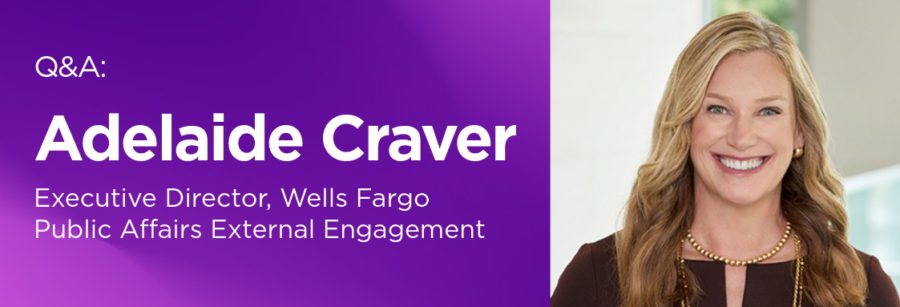
Q: Would you tell us about your role at Wells Fargo?
Craver: One of the greatest pleasures of my current role is managing Wells Fargo’s student‑athlete financial education program for college athletes. I run that program in partnership with Game Plan, which recently merged with BridgeAthletic.
Through that partnership, Wells Fargo sponsors financial education designed for college student-athletes at no cost to athletic departments. Any higher‑education institution—from a single team to an entire athletic department with hundreds of athletes—can access this program. It’s been incredibly rewarding to watch the program evolve.
Q: Why is financial literacy especially important for college student-athletes?
Craver: College athletes are one of the consumer segments that need financial education the most. Many athletes are earning real income—often for the first time—while still in school. They’re going to class, practicing, traveling and now managing [NIL] income and soon, revenue sharing for more athletes. These financial decisions are no longer hypothetical. They’re real, they’re happening now and they often come with long‑term consequences if they’re not handled properly.
In a national survey of 1,000 college student-athletes, nearly 75% said they wanted more education on topics like taxes, investing and money management. More than half of those respondents reported experiencing an unexpected tax issue related to NIL income.
We firmly believe that teaching financial literacy early helps student-athletes avoid costly mistakes and build healthy financial habits—turning short‑term opportunities into long‑term financial stability.
Q: What are the financial habits this audience needs the most help with?
Craver: No matter what stage of life you’re in, understanding your financial means and obligations is foundational. For college‑age students, that means the basics: understanding income, expenses and how to manage both.
Through Wells Fargo’s financial education—and our work with Imprint—we categorize expenses into three groups: needs, wants and savings. I love that savings is treated as an “expense,” because I think of it as paying yourself first.
Savings are critical for fun goals like a spring break trip, but also for unexpected expenses like car repairs. No matter how small the amount, treating savings as an expense early in your financial journey is one of the most important habits you can build and maintain.
Q: How does learning these concepts early pay off over the long term?
Craver: Having a basic understanding of financial fundamentals early helps build a strong foundation for managing and growing wealth over time.
Understanding budgeting, managing expenses, saving consistently and using credit wisely can help people avoid pitfalls and be better prepared when hardships arise. These core concepts don’t just help student-athletes today; they prepare them for life after college.
We hear stories, and you see them in the news, about athletes coming into significant income without understanding its tax implications. That can lead to debt or financial stress simply because money wasn’t set aside appropriately. Financial literacy helps prevent those scenarios and positions athletes for healthier financial lives long term.
Q: How does financial literacy impact confidence, particularly for young people?
Craver: Athletes are built to be winners, and that confidence can be a strength. But sometimes it can also turn into overconfidence when it comes to money.
Research shows that student-athletes often feel highly confident managing their finances, despite having lower objective financial knowledge than non‑athletes. That false confidence can lead to overspending, poor budgeting or tax mistakes.
Financial education helps close that gap. It empowers athletes to manage irregular income from NIL deals, correct overconfidence before it becomes costly and build real, sustainable confidence rooted in actual knowledge rather than assumptions.
Q: How have colleges and athletes responded to the program?
Craver: Wells Fargo has recognized the importance of financial education for athletes for 11 years. We launched our partnership with Game Plan in 2015, long before NIL was part of the conversation.
As earning potential has evolved, adoption has increased. Financial literacy is now viewed as an imperative life skill—something athletes and institutions expect to be available.
In 2024, Wells Fargo expanded the program to make it available to all athletic departments nationwide, and we worked with Imprint to refresh and expand the curriculum. In 2025, a full set of 17 courses was available for the first time, and we saw a 137% increase in course completions on Game Plan over prior years.
That tells us the need is real, and the appetite is growing.
Q: Finally, since it’s Financial Literacy Month, what do you hope people take away from this broader conversation?
Craver: Financial literacy is a key component of overall health and well‑being. People with basic financial literacy skills are significantly less likely to feel financial anxiety or stress, even after accounting for income and education.
This doesn’t mean eliminating financial burdens, it means understanding your finances and having the knowledge to manage situations as they arise. No matter where you fall on the income or wealth spectrum, financial literacy can support a healthier, happier life with less stress.
The need for financial literacy continues
As Craver points out, improving financial literacy can literally make the lives of our clients’ customers better. According to EBSCO, nearly two-thirds of Americans can’t pass a basic financial literacy test, which surely is connected to the fact that 64% are anxious about their finances.
At Imprint, we remain committed to helping our clients educate their various audiences on all the key financial topics that benefit financial institutions and their customers alike. To learn more about helping your audiences improve their financial literacy, send us a message here or email imprint@imprintcontent.com.